


This article is brought to you by Bani Kaur from Prediko.
Last updated: 2026-02-19
—
You’ve got a killer product in the works, and you’re ready to share it with the world.
But how do you predict how much inventory you’ll need without over or underestimating?
There’s an overlooked strategy to predict the demand for a new product—using a landing page.
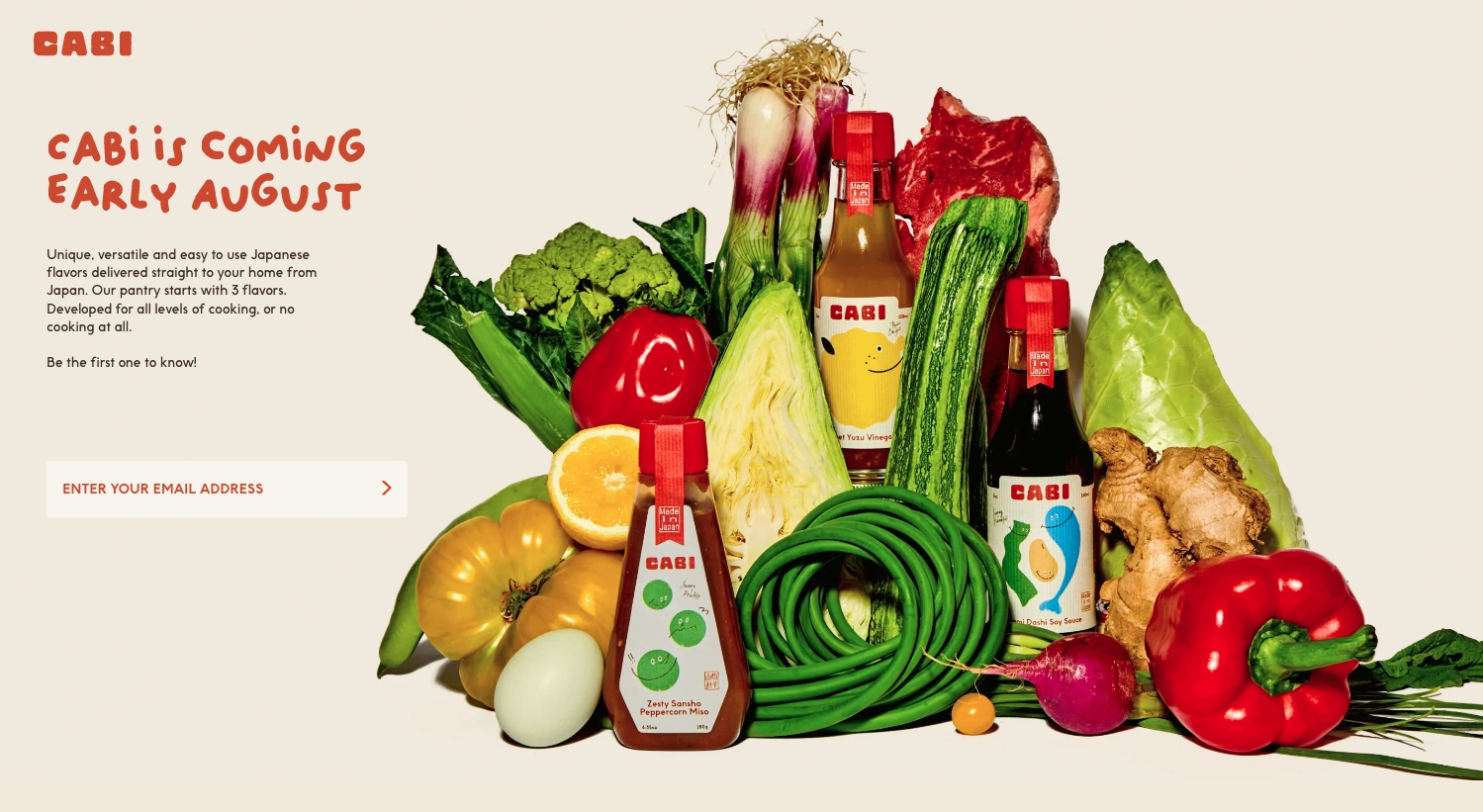
It might sound unconventional, but your landing page can actually be very useful for figuring out how many units you need before you even launch.
It’s like a mini-test market that helps you have a baseline forecast.
We’ll walk you through how the data from your landing page can guide your pre-launch inventory decisions, helping you strike the perfect balance before your product even hits the shelves.
How Can Landing Pages Help You In Pre-Launch?
A strong landing page can set your product up for success even before the launch day. Here’s how to make the most of it:
1. Generate buzz and build anticipation
A well-designed landing page can tease your upcoming launch, creating excitement and curiosity.
By including a countdown timer, a sneak peek of what’s to come, or a compelling CTA like ‘Join the waitlist’, you can hook potential customers early and keep them engaged.
.avif)
2. Lead generation
One of the primary uses of a pre-launch landing page is to capture email addresses or other contact information from interested visitors.
You can offer incentives like early access, exclusive updates, or special discounts in exchange for signing up. This builds your initial audience for when you launch.
.avif)
3. Validate your idea
Pre-launch pages are a litmus test for demand.
Let’s say you’re launching bundles. By driving traffic to your landing page (through ads, social media, or word of mouth), you can gauge interest and potential demand for your bundle boxes.
Metrics like sign-up rates, time spent on the page, or click-throughs on specific elements can tell you if your idea resonates with your target audience. Strong engagement and sign-ups? You’re on the right track. If not, it’s a sign to tweak your strategy.
4. Test messaging and positioning
A pre-launch landing page lets you experiment with headlines, value propositions, and calls-to-action (CTAs). You can A/B test different versions to see what connects best with your audience, refining your marketing strategy for the full launch.
5. Build community and generate early revenue
Landing pages help you build a community of early adopters who then become your first customers, beta testers, or even brand advocates.
Plus, by including a pre-order or reserve option on your landing page, you can generate early revenue and lock in commitment from users who are excited to try your offering.
{{get-started="/components"}}
How To Use Landing Page Data For Pre-Launch?
Pre-launch landing page data can be used to inform decisions across multiple aspects of your business. The key areas include
Capturing and nurturing customer interest
Once you’ve identified interested people through your landing page (e.g., via email sign-ups, pre-orders, or engagement metrics), use that data to find similar audiences (lookalikes).
Next, focus on nurturing their interest and building trust. Send follow-up emails, including welcome sequences, drip campaigns, and countdown reminders to keep them engaged.

Amplify your launch on social media by collaborating with influencers, running polls, or hosting Q&A sessions to build community excitement.
Segment audience based on engagement levels, e.g., “High Engagement” (signed up) vs. “Passive” (just visited the page), and tailor your follow-up accordingly like running retargeting ads with a “Last Chance to Join” message. Sync the ad’s hook with what initially caught their attention, such as a specific feature they viewed.
Gathering actionable insights
Beyond interest, landing page data offers deeper insights into customer behavior. Different metrics help you understand what resonates with your audience.
- If visitors linger on a “Care instructions” section, it signals what they’re trying to understand, hinting at a potential marketing POV
- If there’s high mobile traffic, you might want to optimize for smaller screens or build an app
- Use heatmaps (e.g., Hotjar) to see where users click, hover, or scroll. If they obsess over a video demo but ignore pricing, you know what’s hooking them and what’s not.
- Weak CTA performance and fewer responses might mean the offer feels vague or uncompelling
- More clicks on FAQ links or dropdowns highlight what’s unclear (e.g., shipping, pricing, or compatibility) letting you address it pre-launch
- If you’re running ads or optimizing for search, see which terms (e.g., “alternative to [competitor]”) bring traffic. This shows how you’re perceived vs. rivals.
Aligning pre-launch hype with stock availability
Use signup numbers, pre-order volume, and page traffic to forecast demand and plan inventory. Calculate your visitor-to-signup ratio and projected signup-to-purchase conversion rate to estimate initial sales volume.
Cross-reference this with geographic data (e.g., via IP tracking) to predict where demand will concentrate and adjust inventory distribution.
If stock is limited or demand is high, create a waitlist with priority tiers based on signup timing or engagement (e.g., clicked a specific link) or consider rolling out in phases (early access for sign-ups, general availability later). Communicate this transparently to manage expectations and maintain hype.
Optimizing purchase orders
Use landing page metrics (e.g., click-through rates, form submissions, pre-order data) to make your procurement or production decisions.
Create POs based on pre-launch demand data and share them with suppliers to ensure timely restocking.
.avif)
If multiple options (sizes, colors, features) are offered, analyze interest to determine which variations to stock more. Plan a 10-20% inventory buffer based on landing page demand signals, as pre-launch enthusiasm often underestimates launch-day spikes.
Pro-tip: If demand exceeds expectations, use the data to negotiate with suppliers.
How To Drive Traffic To Your Pre-Launch Landing Page
Your job isn’t done once the landing page is live. You need to actively bring traffic and build excitement to make sure people actually find and visit it.
1. Running Paid Ads (Meta, Google, TikTok)
Investing in paid ads is one of the fastest ways to drive traffic to your pre-launch landing page. Platforms like Meta (Facebook & Instagram), Google, and TikTok allow precise targeting based on interests, behaviors, and demographics.
The key is to test multiple creatives (videos, carousels, and static images) while experimenting with different ad copy to see what drives the highest opt-ins.
Retargeting campaigns can also help re-engage visitors who didn’t sign up the first time.
Think of this investment as part of a market research budget and, if successful, as a future customer acquisition cost. If you’re doing pre-orders you might even be ROI positive before you’ve even launched.
2. Using your existing email list/newsletter
If you already have an audience through a brand newsletter, blog, or previous customers, use it.
Send teaser emails with compelling subject lines, sneak peeks, and exclusive launch perks.
You can also promote a referral program within your email list (e.g., “Get early access + $10 off for every friend you refer!”) can generate organic word-of-mouth.
3. Organic social promotion
Use your brand’s social media channels to build anticipation.
Regularly post behind-the-scenes content, product sneak peeks, countdowns, and interactive Q&As to engage followers.
TikTok and Instagram Reels, in particular, are great for virality, while Twitter and LinkedIn can help with thought leadership and industry buzz.
A well-planned giveaway (e.g., “Tag a friend & sign up to win a free product”) can also bring in more organic shares.
Pre-Launch Strategies For A Successful Launch
Launching a product is as much about preparation as it is about execution, and a few smart pre-launch strategies can make a lot of difference. Some of these are:
1. Build a high-converting landing page
.avif)
Your landing page is the first impression and HQ for collecting leads and building excitement. Design a simple and visually appealing page.
If you’re a Shopify merchant, use tools like Replo for drag-and-drop design simplicity. Focus on mobile-first design since 50%+ of traffic is often mobile.
Start by including a bold headline (e.g., “The Future of [X] Drops March 31st”), a strong CTA (e.g., “Prebook Now”), and a signup field/form. Add visuals like product shots or a teaser video to hook visitors. You may also include an incentive (e.g., early access or a discount) along with a signup counter (“5,000+ awaiting launch”) or logos of press mentions to build credibility.
For a complete breakdown of key landing page elements that help businesses sell, check out the full guide.
Use Replo’s A/B testing to try different headlines or button colors. Track conversions with Replo’s built-in stats to see what sticks.
{{get-started="/components"}}
2. Communicate clear timelines and expectations
.avif)
Transparency in communication prevents frustration and aligns hype with reality, especially if stock is limited or demand is high.
- Pin the launch date (e.g., “March 31, 2025”) everywhere, landing page header, email footer, and social bios
- Use phrases like “Limited Stock Available” to signal availability without overpromising
- Use a countdown timer on the landing page and in emails (like “27 days left!”) to make it tangible
- Add an FAQ section on the landing page covering “When will I get it?” or “What if it’s delayed?” to reduce uncertainty
3. Set up automated order confirmation and follow-up workflows
.avif)
Automation saves time, ensures every buyer feels valued and informed, and keeps them engaged post-commitment.
Here’s an example of an effective email flow:
- Confirmation: Trigger an instant “Order Confirmed!” email with details (item, total, shipping ETA) and a teaser (e.g., “Get ready for your [product]!”).
- +1 day: “Your order’s being prepped/packed! Here’s a quick [video/guide] to get started.” Add a personal touch like their name.
- +3 days: “Spread the word and refer friends for rewards” Link to your referral program.
- Shipping alert: “We just shipped your order. Track it here: [link].” Auto-pull tracking from your 3PL
- Post-delivery (optional): “We hope you’re loving it! Let us know how we did” with a review link or survey
Test the workflow with dummy orders to catch glitches before the launch day and keep emails mobile-friendly.
4. Offer referral incentives
.avif)
Referrals turn early adopters into advocates, amplifying your reach organically. Offer clear tangible rewards, e.g., “Refer 2 friends, get 10% off” or “Refer 3, get a free item.” Ensure the rewards are easy to earn but valuable enough to motivate.
Use referral tools and give each signup a unique referral code post-signup. Promote it in emails and add a “Refer Friends” CTA on the thank-you screen. Monitor referral signups and reward redemption stats to measure ROI. Lastly, adjust incentives or simplify the process if uptake is low.
Case Study: Pre-Sales Strategy Of Haven Athletic
Youri, Founder of Prediko, breaks down Haven Athletic’s Pre-Sale strategy on a Limited Supply Webinar.

Here’s how the brand successfully captured sales for products that were not even in stock
- Haven Athletic designed a super-clear Product Detail Page (PDP) that gives customers all the information they need. It displays shipping timelines for different batches and shows which ones are still available.
For example, if the mid-March batch is sold out, customers can still purchase from the remaining two. They also use a sold status bar, which not only builds urgency but also gives shoppers visibility into how much stock is left.
- On the backend, they’ve set up email automation to keep pre-sale customers informed. The follow-ups let them know they’ve purchased a pre-sale item and shipping will take longer than usual. Regular follow-ups keep them engaged and reassured throughout the wait.
- To streamline fulfillment, Haven Athletic labels ‘Pre-sale’ for all pre-sale orders in Shopify. This ensures their team can prioritize and ship these orders the moment inventory arrives, making the process as efficient as possible.
Bridge Marketing And Inventory Planning
A successful product launch isn’t just about generating hype; it’s also about ensuring you have the right inventory to meet demand.
That’s where Prediko and Replo come together—turn landing page data into actionable inventory decisions, preventing stock-outs or over-ordering, and build high-converting landing pages that drive engagement and capture demand in real time.
By combining marketing insights with inventory planning, you can launch your new products with confidence, knowing you have the stock to fulfill demand and the marketing strategy to maximize sales.