Marketing Funnel Examples Part 2: Influencer Ad To Landing Page Funnels
This is Part 2 of our 6 part series on the top real life marketing funnel examples. Read more to learn about Influencer Ad To Landing Page funnels.


A well-executed marketing funnel is the difference between building a loyal base of repeat buyers and brand advocates, and not being able to turn your traffic into revenue.
Today, we’re covering how to create marketing funnels that sell, plus the top 6 marketing funnel examples and their use cases. This is Part 2 of our 6 part series, deep diving into Influencer Ad to Landing Page Funnels.
Key Takeaway: What Is A Marketing Funnel?
A marketing funnel is a roadmap that guides shoppers from discovering your brand to purchasing a product to becoming a loyal customer. The end goal is to build long term relationships with shoppers, nurturing them from brand strangers into repeat buyers.
The five stages of a marketing funnel are as follows: awareness, consideration, conversion, retention, and advocacy.
What Is A Marketing Funnel?
A marketing funnel is a roadmap that guides shoppers from discovering your brand to purchasing a product to becoming a loyal customer.
The end goal is to build long term relationships with shoppers, nurturing them from brand strangers into repeat buyers.
Marketing funnels can be online and offline. For the purposes of this article, we are focused solely on online marketing funnels—specifically those that apply to ecommerce.
Ecommerce marketing funnels are different from traditional marketing funnels, because every interaction online generates trackable behavioral data that brands can then use to better target potential customers across various online channels.
Examples of this include personalizing content to target customers more accurately at scale, as well as using real-time optimization and A/B testing different landing page variants.
While online and offline marketing funnels share the same five steps, online marketing funnels have grown increasingly non-linear.
Each stage can have many touchpoints, and a shopper can go back and forth between stages before finally making a purchase. Or, not making a purchase at all.
So, how do you ensure that shoppers go from customer to loyal advocate? By optimizing for a few key performance metrics for each stage of the funnel.
Let’s break it down.
{{marketing-funnels="/components"}}
What Are The Stages Of A Marketing Funnel?
Marketing funnels usually contain the same five stages.
Another common method of thinking about marketing funnels is top of funnel, middle of funnel, and bottom of funnel, though this approach focuses more so on driving users to conversion, rather than creating a holistic view of the entire marketing funnel, which includes retention and customer loyalty post-purchase.
For the purposes of this article, we are focusing on the 5 stage marketing funnel first. Feel free to access the linked articles above to read more about the three stage approach.
Marketing Funnel Stage 1: Awareness
This stage is where customers discover your brand through search results, social media, lead magnets, and paid or organic content marketing.
At this stage, the goal of a brand is to build recognition and trust among a wider audience. Not everyone in this pool may be the target audience, but for the sake of exposure, brands do not need to get too targeted at this stage yet.
Key metrics to focus on at this stage include organic traffic growth tracking, engagement with paid or organic social media posts, social media followers, and sessions across the entire store.
Learn more about how to drive traffic to your store.
.avif)
Marketing Funnel Stage 2: Consideration
This is the stage when product evaluation and engagement takes place.
Customers are looking for product information to consider whether or not to hit buy. This is where landing pages come in (check out our templates from top brands or our recommended list of AI tools to help you build them!). Educational pages with extensive product detail and comparison sections, informative email flows, third-party review or product comparison websites (such as comparison shopping sites) become primary sources of information.
At this stage, the brand’s goal is to educate shoppers on the product and to build brand trust. The segment becomes smaller as marketing campaigns and messaging grow more targeted to specific demographics or psychographics.
Key metrics to focus on at this stage include email open rates, time spent on page per session, ad landing page bounce rates, and add to cart rates.
.avif)
Marketing Funnel Stage 3: Conversion
This is the stage when the shopper converts.
In most cases, that means making a product purchase, though it can also mean any number of activities that the brand wants to encourage, such as someone signing up with their email on a lead generation page or joining an exclusive loyalty rewards program.
In the case where a conversion involves a purchase, the shopper heads to the checkout page and becomes a brand customer.
At this stage, shoppers want a low-friction, easy to use, and transparent checkout experience. Make sure your cart page and checkout page fulfills all these elements by keeping your designs simple, clean, and to-the-point.
Reduce any sources of user friction, build in strong product guarantees (such as a 30 day product satisfaction or full refund guarantee), and add in trust signals (such as user generated social content or honorable mentions from reputable sources).
.avif)
Be transparent about product pricing and any additional shipping costs or service fees; build in urgency mechanics such as a one-time 15% off discount code that will expire in 15 minutes to seal the deal.
Key metrics to focus on at this stage are conversion rates, cart abandonment rates, revenue per session, and average order value (AOV).
Notably, according to a 2025 report by Statista, nearly 40% of U.S. consumers abandoned online purchases during checkout due to high added costs, such as shipping, taxes, or fees. On top of that, around 20% cited slow delivery and the hassle of creating an account as reasons for backing out of a purchase.
.avif)
Marketing Funnel Stage 4: Retention
This is the stage when customers make additional purchases and build loyalty towards the brand.
At this stage, the brand’s goal is to leverage that initial purchase or conversion to encourage a stronger customer-brand relationship, strengthen customers’ familiarity with the brand, and recommend products relevant to the customer.
This can occur through personalized email newsletters, loyalty programs with exclusive content or promotional discounts, subscription plans, social media marketing about brand-hosted events, targeted paid influencer marketing, and even mailing out thank-you gifts to first-time customers.
This stage of the funnel can require a longer timeline, as it involves a continuous maintenance of relationships with the customer.
Key metrics to focus on include repeat purchase rates, email flow engagement rates, and customer lifetime value (LTV).
Marketing Funnel Stage 5: Advocacy
This is the final stage of the customer marketing funnel. It is also the ideal stage. All brands should aim to reach this stage with all their customers.
This is the stage when your customers support your brand so much they help you market yourself to their own networks through referrals and word-of-mouth.
At this stage, customers are voluntarily mentioning your brand and products in their own social media content, or to their own friends and family.
Brands can further encourage this behavior.
Tactics include featuring high-quality user generated content on landing pages or product pages (or product-centric homepages) and tagging the customer, giving stellar customer reviews a shout-out in email and social marketing channels, or by setting up a referral program where both your customers and you can benefit.
.avif)
Key metrics or indicators to track include the quantity and rating of user-generated content and customer reviews, the performance of your brand referral systems, the customer acquisition cost, and the customer lifetime value to customer acquisition cost ratio (LTV/CAC).
In general, the target LTV/CAC ratio brands should aim for is 3:1. This means that for every $1 spent on customer acquisition, such as paid ads or cold sales outbound, a brand is earning $3 in revenue in return.
The baseline is 1:1, meaning the brand is just breaking even. Anything below that requires immediate attention, as this means the brand is spending more on customer acquisition than it is gaining from the acquired customers.
Anything above 5:1 is exceptional; this means that the brand should actually seek to spend more on customer acquisition by scaling its marketing and sales efforts, or by expanding into new audience segments.
This will attract more sales and increase LTV over time, meaning LTV/CAC will stabilize at a new, lower ratio, but drive more total revenue in the long run.
The formula for LTV/CAC is: (Average Order Value × Purchase Frequency × Customer Lifespan) ÷ CAC
For more detail about LTV/CAC and how it impacts your business, check out our full guide. Or, use our ecommerce calculator to see how your brand compares against the target range.
In summary, to drive maximum revenue and conversions, brands should balance brand building with performance marketing across all five stages of the marketing funnel.
Let’s take a look at the 6 most common marketing funnel examples that leading DTC brands such as Simple Modern, Woxer, Tushy, and more like to use to grow their revenue.
{{get-started="/components"}}
How To Create Marketing Funnels
Usually, the general steps of a marketing funnel do not differ too widely between use cases, given the end goal is often to drive to a product purchase for revenue or an email sign up for lead generation.
However, there are many different ways in which brands can customize the content and structure of their ads, emails, or funnel pages to better target shoppers at different places in the marketing funnel.
For example, you would not market to a more familiar shopper who has already added items to their cart (meaning they are further down the funnel), the same way you would someone who is completely brand new to your store (meaning they are still near the top of your funnel).
Let’s take a look at Part 1 of the 6 most common marketing funnel examples and their use cases.
Marketing Funnel Examples Part 2: Influencer Ad To Landing Page
The influencer ad to landing page funnel is structured exactly like a regular ad to landing page funnel, except it leans into social proof by associating the brand’s products with a collaborating influencer.
Use Case
The goal of an influencer ad to landing page funnel is product purchases.
This taps into the influencers’ pre-existing audience, helping to boost awareness among new audiences. It also helps boost conversion rates among the new influencer-familiar audiences, given the influencer’s endorsement.
It’s important to note that influencers represented in this marketing funnel should have a background or niche that overlaps or is adjacent to the product that the brand is selling.
For example, a clothing brand would benefit greatly from integrating a fashion influencer into their marketing funnels, while it might not benefit as much from collaborating with a food influencer.
Brands use this marketing funnel as a great method for generating conversions and reaching shoppers with interests in adjacent or similar categories, but are currently unfamiliar with the brand’s products.
Step 1: Influencer Advertisements
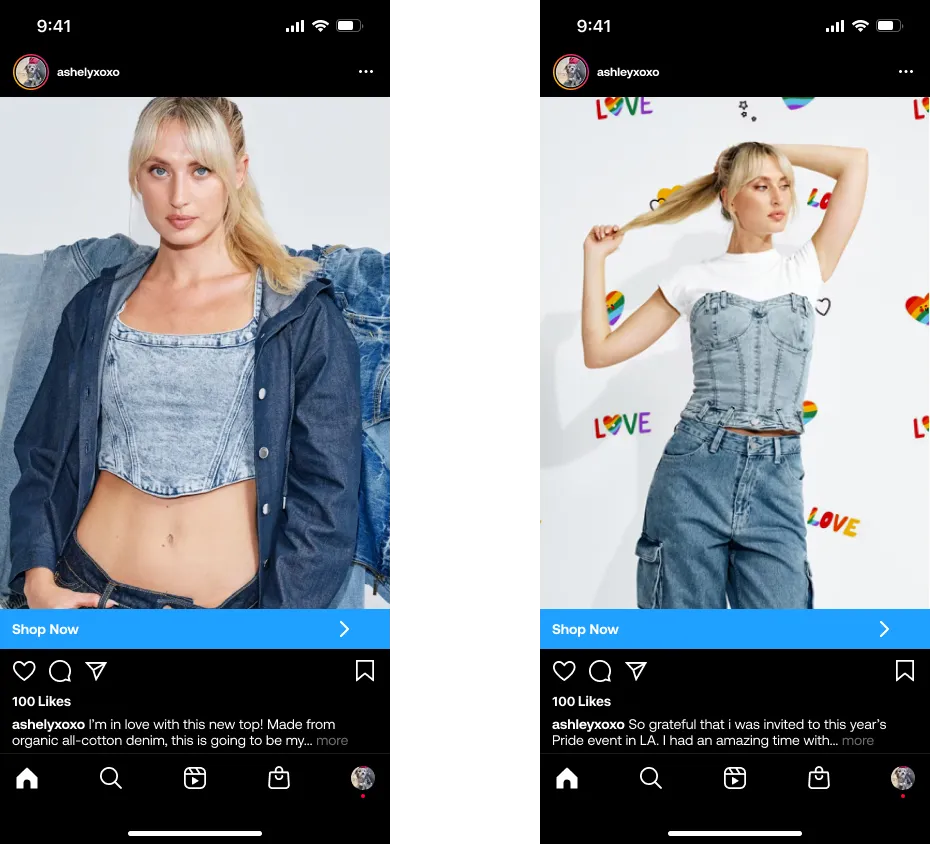
Influencer ads can be run on any channel, though increasingly, they are most often found on Instagram due to the platform’s highly visual nature.
Here, the shopper’s first interaction with your brand will be through the influencer promoting your product. Their introduction will set up expectations for what your product is for and why it is unique or beneficial to audiences.
When done right, the influencer should act as a figure of authority in their niche who can credibly communicate the value of your brand and extend an attractive offer. Examples include a fashion influencer wearing your products in a video ad on social media, and then explaining how followers who use her discount code to purchase items in your store can get 15% off.
A CTA on the ad will lead audiences to the next step.
Step 2: Collections Page
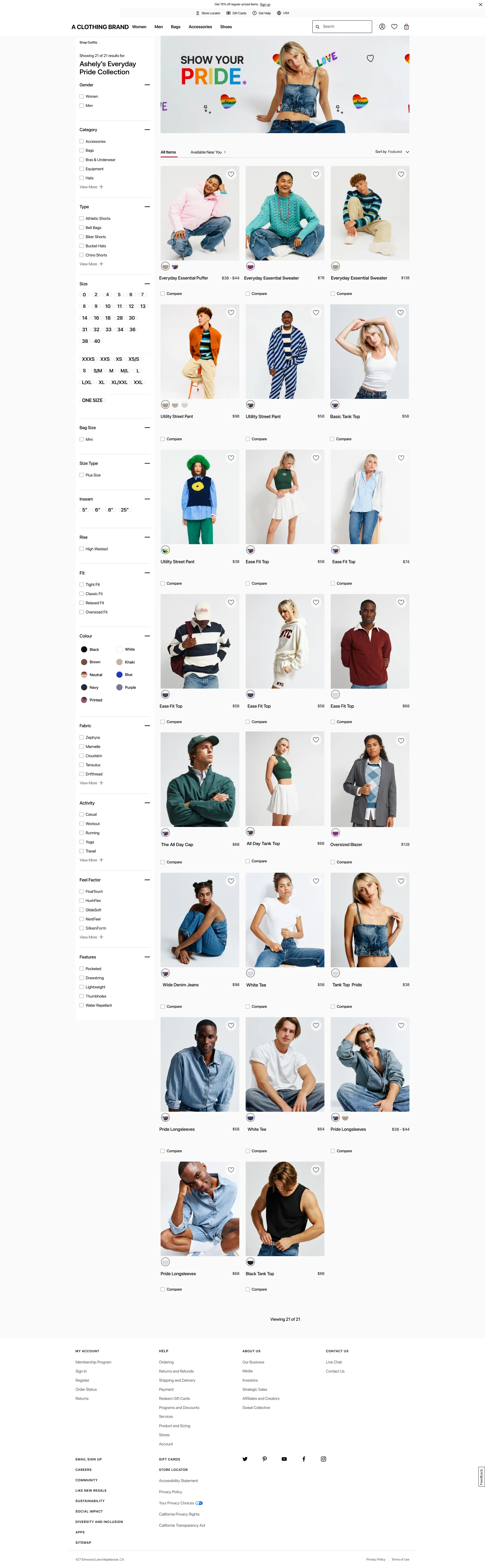
Like in an ad to landing page funnel, you want to maintain content continuity between the ad and landing page. In an ideal state, this means the landing page that the previous influencer ad links to should feature some content that calls back to the influencer.
An example of this would be a collections page titled after the specific influencer, with a hero section featuring her image, and listing products that have been specifically recommended by the influencer to audiences in the influencer ads.
This maintains the connection between ad and landing page, as well as the influencer and your brand.
Customers at this stage are now considering whether or what to buy, and the display of pre-selected items on a collection page reduce decision fatigue while building brand trust.
Step 3: Product Detail Page
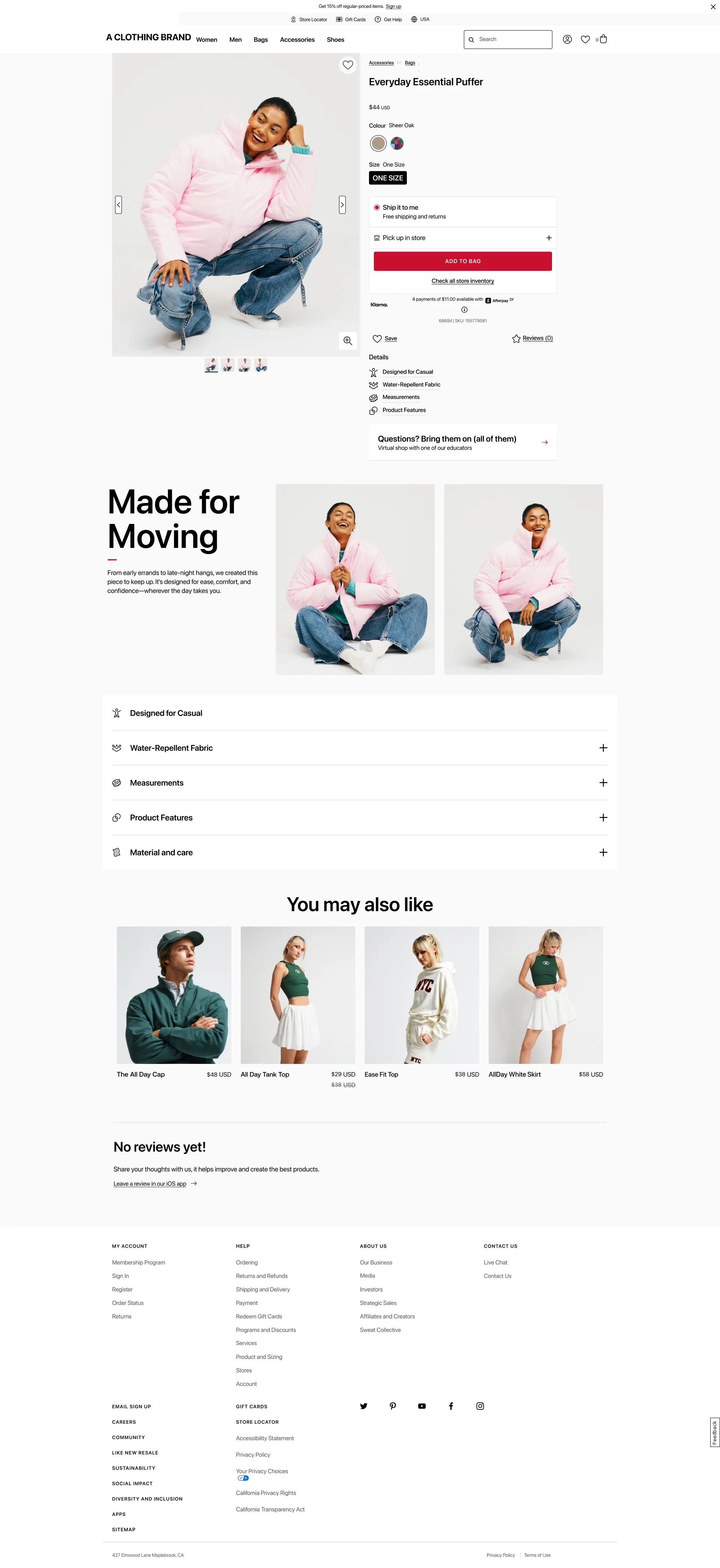
The product detail page (or PDP) is where you want to start getting serious about communicating product information and leaning into social proof. Here, brands have less need to customize content to be influencer specific.
Include clear and detailed product descriptions, high quality product imagery, user generated content, high ratings and reviews, comparison charts, and an enticing offer. Offers can include bundled discounts with complimentary products, subscription plans, quantity breaks, and limited time promotions to drive urgency and boost your average order value.
Show related product sections and recently viewed product sections, as well as any complimentary educational content that can help shoppers envision how your product fits into their daily lives or specific use case.
For example, an informative “how to style” or “style inspiration” section is great for the PDP of a clothing brand.
This step is crucial to informing shoppers’ consideration of your product. The goal is to get audiences to add items to cart and hit checkout.
Step 4: Cart Page
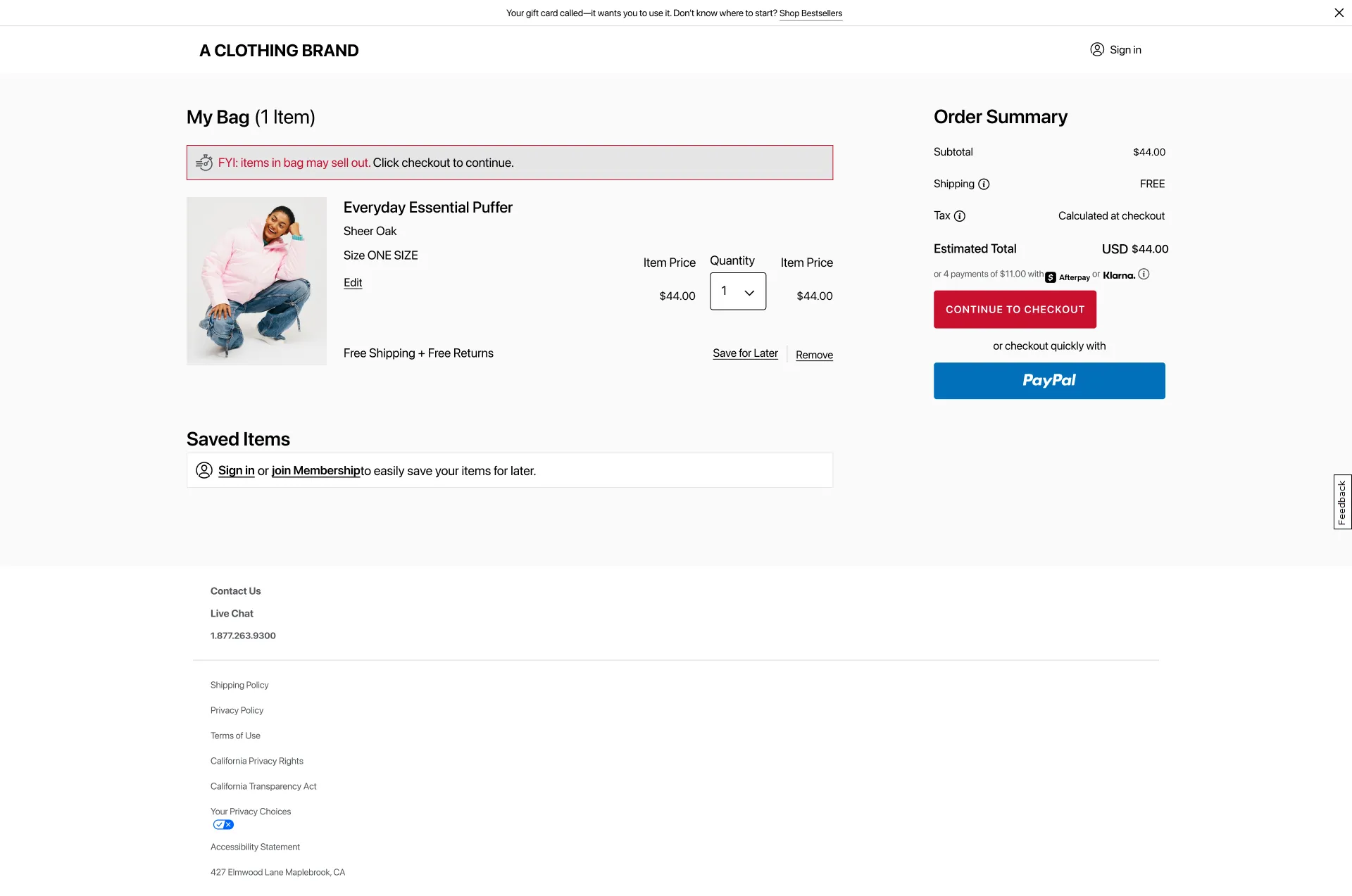
The cart page is the final step before shoppers convert by making a purchase. You want to make this page as simple and easy to understand as possible.
Be transparent about pricing, service fees, and delivery timelines upfront. Customers want to know what they’re signing up for before they pay.
Make sure to include any compelling offers here, but only where relevant. This is where shoppers can put in their discount code from the influencer ad at the start of the funnel.
Don’t cram the space, as it detracts from the user experience. Examples can include a bundle offer with a discount, complimentary products, or a free gift if shoppers buy above a certain threshold.
A positive checkout experience is key to making sure first time customers come back if they like your product.
Step 5: Checkout Page
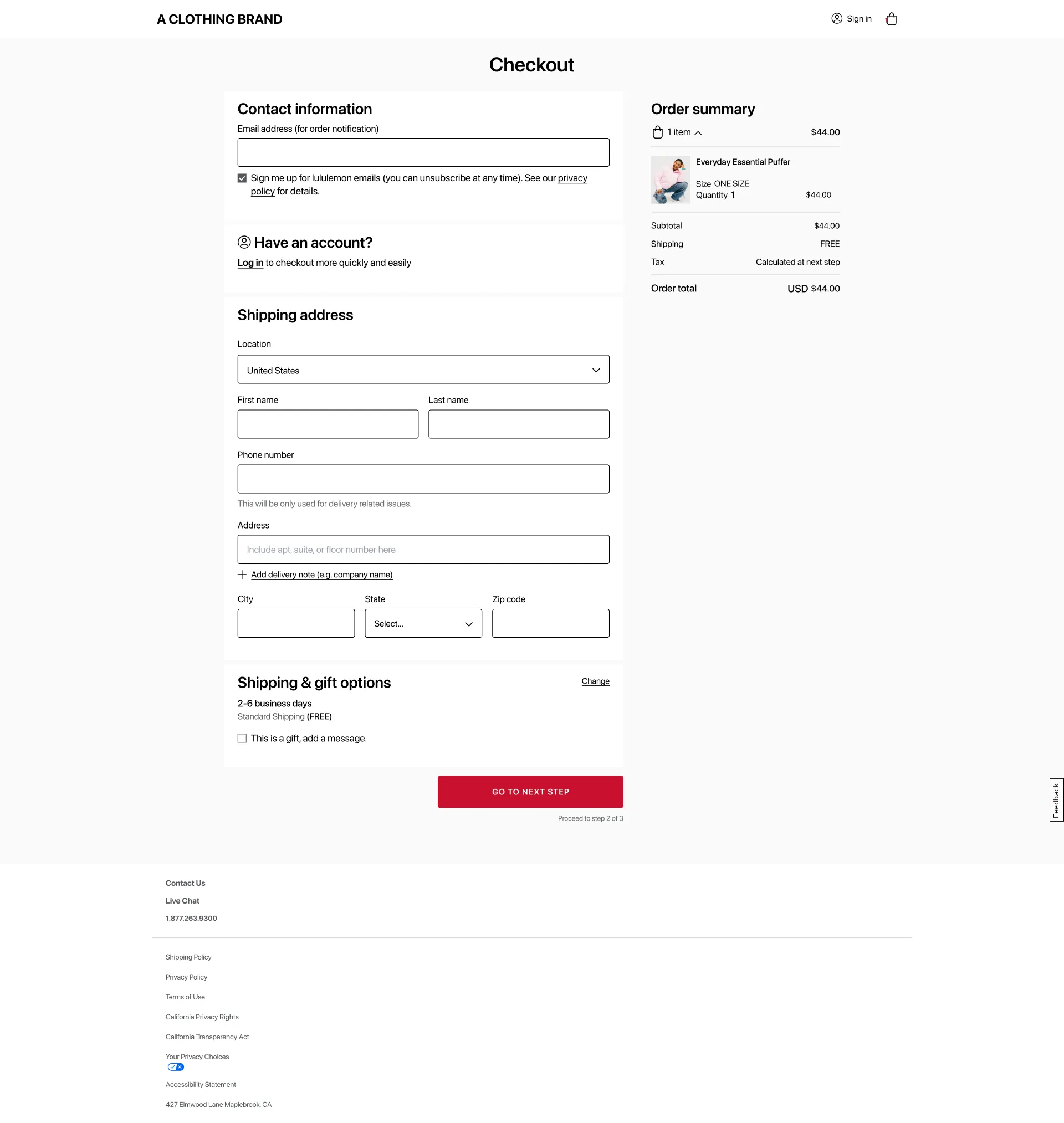
The checkout page is the page where conversion occurs. Again, simplicity and clarity is key.
Keep things informative, easy to use, and include any product offers to improve average order value where relevant.
Also make sure to include strong guarantees on delivery timeline, product satisfaction, refund or exchange policies, and delivery address information. Keep your bases covered on all fronts, even at the final stage.
The goal should be to pre-emptively address any possible uncertainty or concern a potential customer may have about purchasing on your checkout page.
Ask for contact information to keep shoppers informed on any delivery timelines and product updates; you can also use their contact info to enroll shoppers into welcome email flows, upsell flows, and abandonment flows in the future.
With shoppers’ contact information, brands should focus on strengthening customer relationships over the long term by delivering timely, relevant, and engaging content.
That’s a wrap for Part 2 of our 6 marketing funnel examples!
Read Parts 1 and Parts 3 to 6 for the complete rundown of the top marketing funnel types to use in your online store.
Remember, A/B testing with different elements at each stage of each funnel is what allows leading brands to confirm what changes help generate the most revenue, traffic, or leads for their store.
Best practice requires periodic and continuous testing to accommodate for constant shifts across ecommerce industries and competing brands.
Read the related articles to learn how you can build better marketing funnels and landing pages, faster.
{{marketing-funnels="/components"}}
Your full-stack growth engine
From small brands to scaling teams, sell anything on the Internet with Replo.